Dumbbells vs. Resistance Bands for Home Workouts: Which Should You Buy?
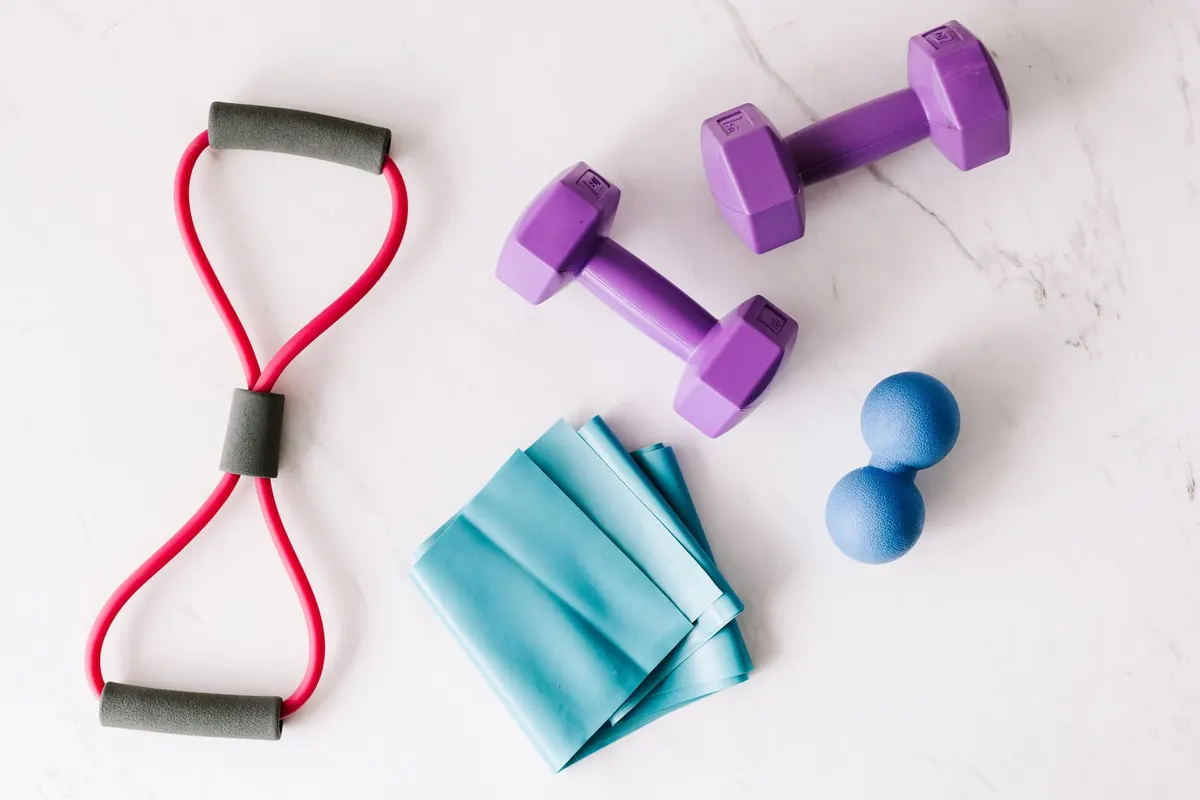
Two pieces of equipment show up in almost every home gym plan: a pair of dumbbells and a set of resistance bands. One claims a corner of the room and lets you load a squat without a barbell. The other lives in a drawer and makes a simple pull-apart feel like work by the last two inches. Both build real strength. Which one deserves your money comes down to how you train, how much floor space you have, and how patient you are with your own progress.
Bands win the first round. A set of tube bands with handles, or a three-pack of fabric loops, costs a fraction of what a pair of dumbbells does. That is the whole appeal for beginners and for anyone testing whether they will actually train at home.
The cheapness has a ceiling, though. As you get stronger you buy thicker bands, then thicker ones again, and eventually you are stacking two bands to make a row feel heavy. Cheap bands also snap, usually mid-rep.
Dumbbells are the opposite trade. Fixed pairs get pricier as they get heavier, and a full rack is a serious purchase. Adjustable dumbbells — spinlock plates you thread on, or dial-style sets — cost more up front but replace dozens of pairs. Dial sets change faster and cost more; spinlocks are cheaper and slower. If your goal involves moving serious weight with your legs, bands run out of road long before dumbbells do.
A band set hangs on a hook or disappears into a backpack. If you travel, rent, or train in a bedroom, that matters more than any spec sheet. Add a door anchor and a pull-up bar and you can train your whole upper body in a two-foot square.
Dumbbells demand a footprint. Adjustable sets still need somewhere to sit while you swap plates, and fixed pairs need a rack once you own more than two sets. In an upstairs apartment, heavy dumbbells raise a practical question: where do you put them down without waking the neighbors below? A rubber mat helps. Controlled reps help more.
This is where the comparison stops being about preference and starts being about physics.
Where bands fall short is heavy lower-body work and any lift where you want a fixed, known load. Where dumbbells fall short is the top of a pull-apart, the constant tension of a lateral walk, and anything that has to fit in a carry-on bag.
This is the part beginners underestimate, and it is the clearest difference between the two tools.
You add weight. Most sets jump in increments of a few pounds, small enough to keep form clean and large enough to notice. When you cannot add weight, you add reps, then sets, then slow the lowering phase, then shorten your rest. Write it down. Next week you beat the number.
You change the setup instead of the number. Options include:
The catch is measurement. A red band from one brand is not a red band from another, and the resistance changes with how far you stretch it. Some makers print approximate pound ratings at a set stretch, which helps, but treat those as a rough guide. Track your reps, your band, and your foot position rather than chasing a number in pounds.
Pick dumbbells first if you train in one place, want measurable strength, and have room to store them. Pick bands first if space or budget is tight, you travel often, or you are working on movement patterns with light, continuous tension. If you are new to training or coming back from an injury, get clearance from a doctor or physiotherapist before loading anything heavy.
Whichever you choose, check your setup. Inspect bands for nicks and cracks before every session, replace anything frayed, and anchor to a solid door that closes and locks — never a hollow interior door for hard pulls. With dumbbells, learn to set them down safely and keep heavy overhead work inside your control. An hour with a coach to check your form is money well spent.
Bands and dumbbells overlap less than people assume. Two or three bands cover warm-ups, upper-back work, and glute activation; a pair of adjustable dumbbells covers the pressing, squatting, and hinging that drives real strength. Bought a few months apart, the pair costs less than a year of gym dues and takes up less space than a coffee table.
If you can only start with one, start where your training will not stall. For most people with a spare corner, that means dumbbells plus one band for the angles dumbbells cannot reach.
Do this before you buy anything.
Neither tool is a shortcut. Both reward consistency, and both work better when you know exactly what you are asking them to do.
Previous Post
Running Shoes for Beginners: How to Choose the Right Pair
Next Post
How to Stay Motivated to Work Out When You Have No Energy