Running Shoes for Beginners: How to Choose the Right Pair
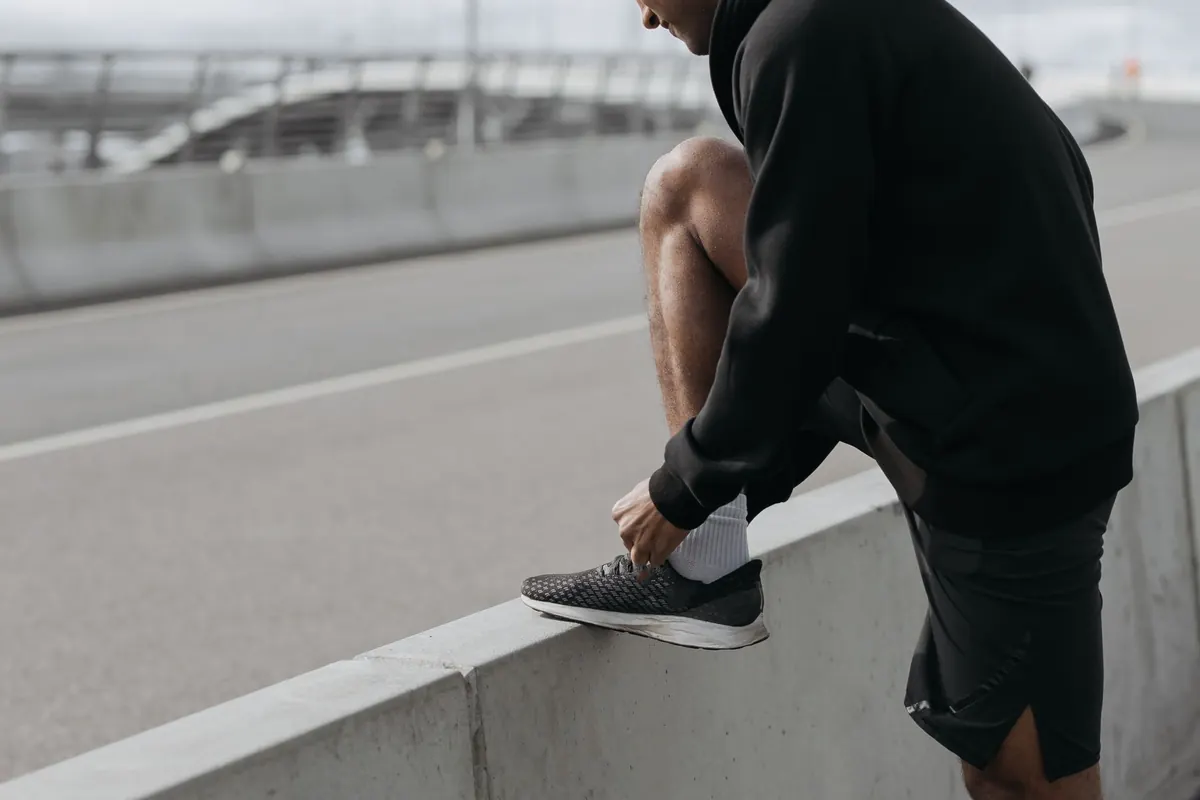
Standing in front of a wall of running shoes can feel like reading a menu in a language you don't speak. Every box promises responsive foam, engineered support, and a ride that will change everything. None of it tells you whether the shoe will suit your feet on a Tuesday morning three-mile loop.
The good news: you don't need to learn shoe jargon to make a smart choice. You need four things — your foot type, how much cushioning you want underfoot, how much heel-to-toe drop suits you, and a rough sense of when a shoe is finished. Get those right and the marketing takes care of itself.
Arch height is a rough proxy for how your foot rolls when you land, and it's the simplest place to begin. Do the wet test: wet the sole of your bare foot, step onto dark paper, concrete, or a paper towel, and look at the shape of the print.
Treat this as a starting direction, not a diagnosis. Comfort overrides category every single time. If a "stability" shoe feels clumsy and a neutral shoe feels like a sock, the neutral shoe wins. If you have persistent pain in your feet, shins, or knees, see a doctor or a physical therapist rather than trying to self-prescribe footwear.
Cushioning is simply the foam between your foot and the ground. It ranges from minimal to moderate to maximum, and more is not automatically better.
For most beginners, a moderate or generously cushioned daily trainer is the sensible landing spot. Your legs are not yet used to the repeated impact of running, and a little forgiveness helps you finish the run and come back for the next one. Starting out in a very thin, firm, minimal shoe is a common beginner mistake — that style of shoe asks for strong feet, patient calves, and weeks of gradual adaptation.
There's a limit in the other direction too. Extremely soft, very tall shoes can feel wobbly, especially if your ankles are weak or you've rolled them before. A slightly firmer foam that springs back can feel steadier and less tiring over distance.
The practical test is a back-to-back comparison. Put on one shoe, then the other. Stand, walk, and jog a few steps. Choose the pair that feels boringly comfortable, not the one that feels fast or looks best. Boring is exactly what you want in a first running shoe.
Drop is the height difference between the heel and the forefoot, measured in millimeters. It usually runs from about 0 to 12mm, with most everyday trainers sitting somewhere around 6 to 10mm.
No drop is inherently right or wrong. What causes trouble is a big jump. If you've been running in 10mm shoes for a year, don't buy 4mm and expect your calves to shrug it off. If you want to go lower, rotate the new pair in for short, easy runs over several weeks.
Keep drop and cushioning separate in your head. A shoe can be tall and soft with a high drop, or low and firm with almost none. They are two different dials.
A perfectly reviewed shoe in the wrong size is a bad shoe. These details decide more than foam ever will:
Buy for the body you have now, not the runner you hope to be in six months. Your first pair only needs to keep you comfortable enough to show up again.
Midsoles wear out long before the outsoles look destroyed, which is why so many people run in dead shoes without realizing it. A common guideline is somewhere between 300 and 500 miles, but that range shifts with your weight, the surfaces you run on, and the shoe itself. Heavier runners and frequent pavement runners tend to wear through foam faster.
Watch for signals instead of relying on a number:
Track it simply: write the purchase month on the inside of the tongue, or log your runs in an app and check the total. Retired shoes don't need to be thrown out — they make fine walking, gardening, and errand shoes. Store wet shoes at room temperature to dry; heat from radiators and dryers breaks foam down faster.
Bring your old running shoes and your running socks, and follow a simple routine:
You don't need the most expensive shoe on the shelf. A mid-range daily trainer that fits well will carry a beginner further than a premium racer that doesn't. And if pain keeps coming back, remember that a sudden jump in weekly mileage causes far more running injuries than the wrong pair of shoes ever will. Shoes help; sensible training helps more.
Photo: cottonbro studio / Pexels
Previous Post
The Desk Worker's 10-Minute Mobility Checklist for Hips and Shoulders
Next Post
Dumbbells vs. Resistance Bands for Home Workouts: Which Should You Buy?