How Much Rest Do You Really Need Between Strength Training Sessions?

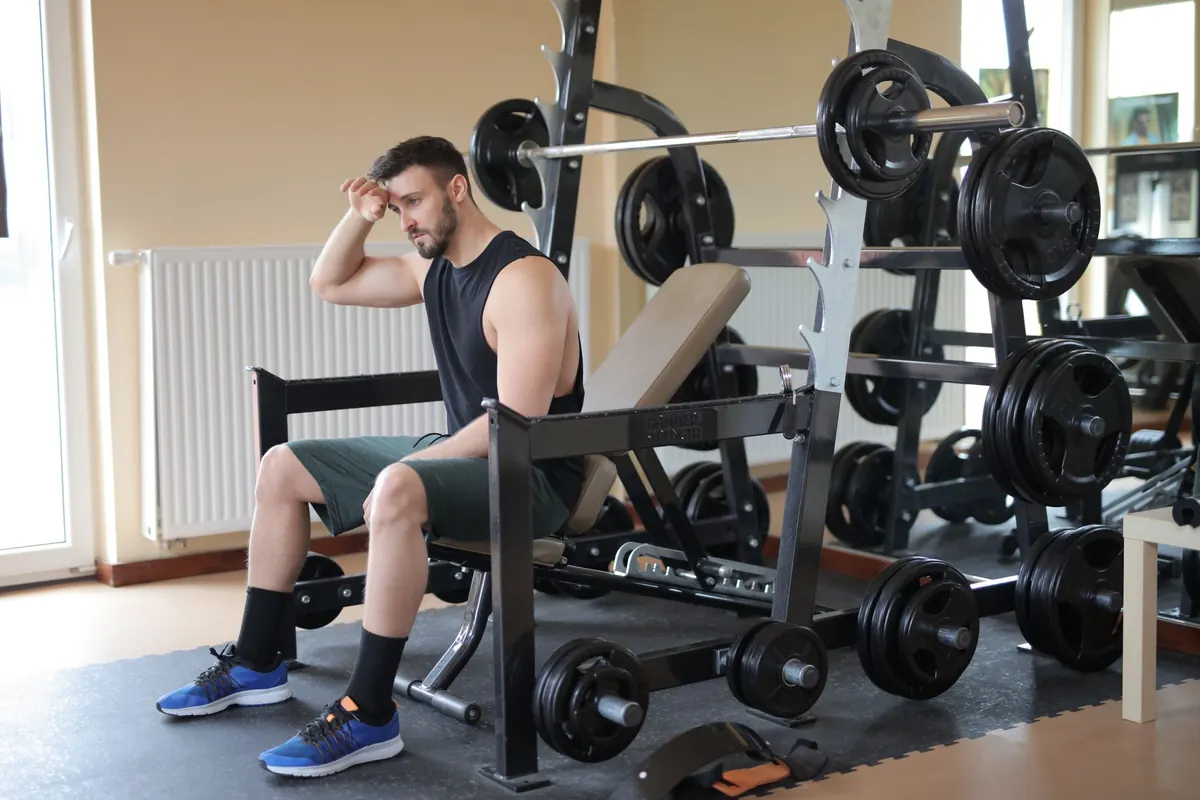
Ask five lifters how long to wait between hard strength sessions and you'll get five confident answers, each one wrong for someone else. The honest answer is that recovery isn't a fixed number of hours you circle on a calendar. It's a window that opens and closes based on which muscles you trained, how close to failure you took them, how long you've been lifting, and how well you're sleeping and eating. Get those four things roughly right and your program mostly runs itself. Get them wrong and you'll either stall from too little rest or waste weeks from too much.
Forty-eight hours is the conventional anchor: give a muscle group roughly two days before hammering it again. For a lot of intermediate lifters doing moderate volume, that holds up well. Treat it as a starting point, not a law of physiology.
Soreness is a terrible timer, by the way. You can be sore for three days after a few sets of curls, or barely sore after a heavy squat session that genuinely needs 72 hours. What matters is whether the muscle can produce the same work, or a little more, than last time. That's the question to ask yourself before the next session, not "does this still ache?"
Size and workload per session drive the timeline. A muscle that moved heavy load through a long range of motion for twenty sets needs more repair time than a small muscle that did three sets of isolation work.
This is also why classic splits work at all. Chest on Monday, back on Tuesday, legs on Thursday spaces each group far apart. The catch is that some people then wait seven days for a muscle that was ready on day three. If you can train a group twice a week while still recovering, you'll usually build strength faster than hitting it once.
Two sessions can hit the same muscles and leave you in completely different states. Three sets of ten at a weight you could have done four more reps with is a much smaller recovery bill than five sets to failure with drop sets at the end.
Novelty is the sneaky one. New exercises, longer ranges of motion, and slow lowering phases cause more soreness and more fatigue than the same volume you've been doing for months, even if the numbers on the bar look identical.
A beginner lifting moderate loads with imperfect technique can often train the whole body three times a week and feel fine. The sessions simply aren't heavy enough to create deep fatigue, and most of the early soreness is from doing something new, not from real damage.
Intermediates are where the 48-hour guideline fits best. Advanced lifters are a mixed case: they move loads heavy enough to cause substantial fatigue, but they also recover from that work more efficiently and often handle high frequency well, provided they autoregulate and take deloads.
Age nudges the window longer for most people, but training history and sleep habits matter more than the birth year. An older lifter with twenty years of consistent training usually recovers better than a sedentary person half their age starting out.
Extreme, swollen soreness that lasts more than a week, or comes with dark urine or severe weakness, isn't a training problem. Get medical attention. And if you have a heart condition, a joint replacement, or you're returning from injury, clear your plan with a doctor or physiotherapist before pushing the schedule.
You don't need a complicated plan. Pick the frequency that fits your life, then arrange it so the same muscles get roughly two days between hard sessions.
If you train on back-to-back days, separate the muscle groups. Upper body Monday and lower body Tuesday is fine. Heavy squats Monday and heavy deadlifts Tuesday is asking for trouble.
Generic numbers get you close. Your own log gets you the rest of the way. For two weeks, write down five things after each session: the exercises and sets you did, how many reps you left in the tank, your sleep, how sore you felt the next morning, and how sore you felt 48 hours later. Add a note about how the following session went.
Patterns show up fast. If your Tuesday squat session always feels heavy and slow two days after Monday's leg day, you need more space. If Thursday's bench flies up and feels easy, you can afford less.
When you're unsure, take the extra day. An extra 24 hours costs you almost nothing over a month. Training hard on a muscle that hasn't recovered compounds, and that's where nagging tendon pain and stalled numbers come from. Rest is part of the program, not the absence of one.
Photo: Annushka Ahuja / Pexels
Previous Post
Intermittent Fasting vs. Regular Meal Timing for Gym Performance: What the Evidence Says
Next Post
The Desk Worker's 10-Minute Mobility Checklist for Hips and Shoulders